
The ELEXIA project, co-funded by the European Union under the Horizon Europe programme, is setting a new benchmark for energy system integration in Europe. By demonstrating how to plan and manage integrated energy systems across multiple vectors and sectors, ELEXIA is paving the way for a cost-optimised, flexible, and resilient energy system of systems. This initiative is not just about connecting electricity, heat, transport, and gas systems; it’s about optimising the entire energy ecosystem to enhance flexibility, resilience, and contribute to Europe’s decarbonisation commitments under the Paris Agreement and the UN’s 2030 Agenda for Sustainable Development.
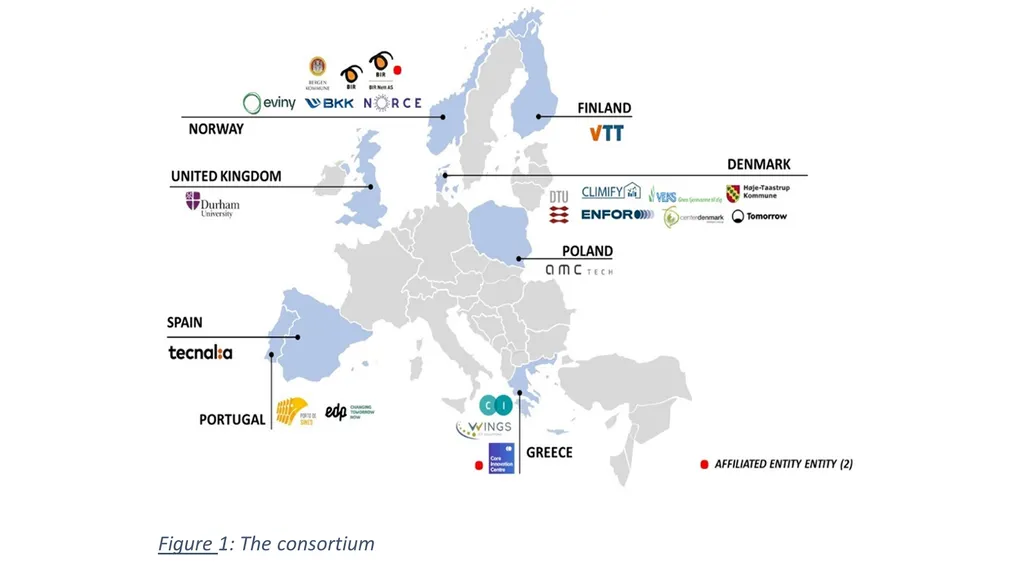
The project’s interdisciplinary approach is particularly noteworthy. It addresses technical, economic, regulatory, and societal boundary conditions, ensuring that the solutions proposed are holistic and practical. The ELEXIA consortium, comprising 22 partners from various European countries, is developing a System Planning Toolbox, Energy Management Systems, and a Digital Services Platform. These tools are designed to support effective sector coupling, flexible operation, and enhanced observability and controllability of energy systems.
The Digital Services Platform (DSP) is at the heart of the ELEXIA system, managing data flow, storage, and interfacing with all modules of the Energy Management System (EMS) and System Planning Toolbox (SPT). The DSP ensures minimal interoperability mechanisms (MIMs), facilitating seamless data exchange and integration. The EMS tools operate close to real-time, providing system operational parameters for the next day and expected operation for the next two to five days. These tools include forecasting modules, data-driven digital twins, flexibility functions, multi-market optimisation, and aggregation toolsets for flexibility bids and health monitoring of critical assets.
The SPT tools, on the other hand, focus on longer-term planning, allowing for the development of new energy systems and the integration of new consumers or assets into existing systems. The DSP serves as a repository for saving different scenarios and versions of the energy system in planning, ensuring that all aspects of cyber and data security are considered.
ELEXIA’s impact will be demonstrated at four complementary pilot sites across Europe: the port of Sinès in Portugal, Høje Taastrup in Denmark, Dokken in Bergen, Norway, and an industrial site in Gaj Olawski, Poland. These sites cover a spectrum of geographical, climate, and economic conditions, providing a robust testing ground for the ELEXIA concept.
The project’s success hinges on its ability to engage stakeholders, assess societal impact, build stakeholder communities, and provide policy and governance recommendations. Cooperation with other projects and initiatives, such as the BRIDGE initiative, the Energy Nexus Cluster, and the EERA Joint Program Energy Systems Integration, is crucial for ensuring the project’s longevity and impact.
ELEXIA’s approach to energy system integration could reshape the sector by demonstrating the benefits of sector coupling and flexibility at both local and national levels. By optimising the energy system as a whole, rather than addressing each sector independently, ELEXIA aims to achieve substantial cost savings and enhance the overall efficiency and resilience of Europe’s energy infrastructure. The project’s outcomes could influence future energy policies, regulatory frameworks, and investment strategies, driving Europe closer to its carbon-neutral energy future.