
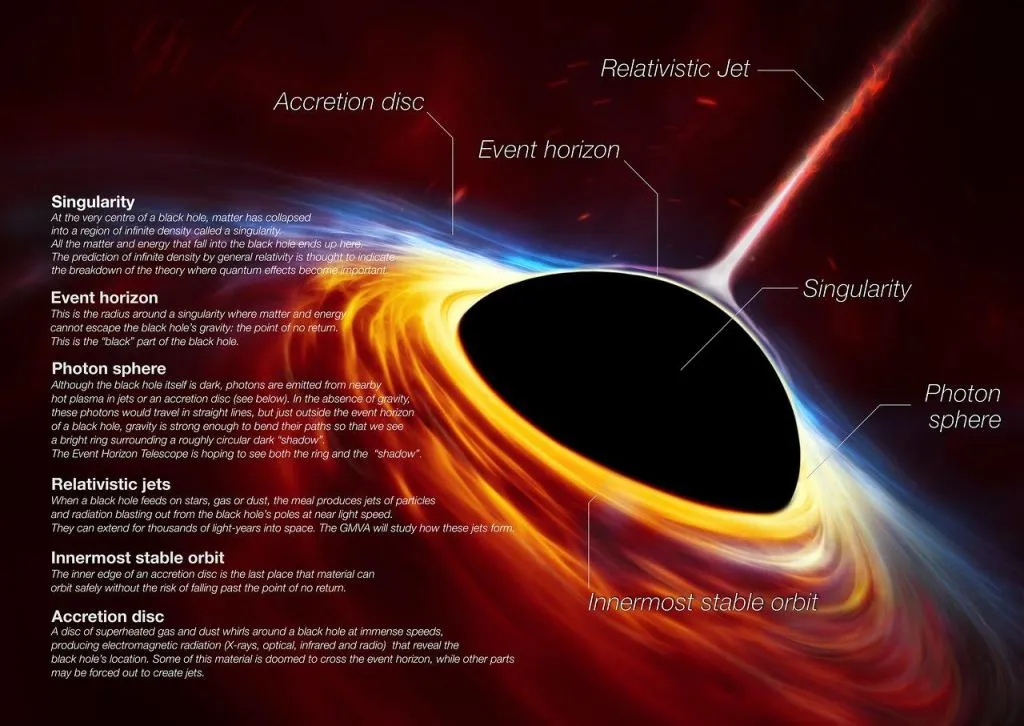
In the realm of theoretical physics and energy research, a team of scientists has delved into the intriguing world of black holes and their behavior within a specific framework of gravity. The researchers, Farid Thaalba, Leonardo Gualtieri, Thomas P. Sotiriou, and Enrico Trincherini, hail from the University of Nottingham and the University of Utrecht, bringing their expertise to bear on the complexities of shift-symmetric scalar Gauss-Bonnet gravity.
The study, published in the journal Physical Review D, explores black holes within a modified theory of gravity that includes a cubic Galileon interaction. This interaction introduces a distinct energy scale, significantly altering the theory’s behavior. The cubic interaction allows for the existence of smaller black holes and creates a screening mechanism near the black hole’s horizon. This screening effect is crucial as it makes large Gauss-Bonnet couplings consistent with observational bounds from gravitational waves.
The researchers found that observable quantities such as the scalar charge, the innermost stable circular orbit, and its frequency are most affected for smaller black holes. This means that in practical terms, the study provides a way to probe gravity in the strong-field regime, offering new avenues for understanding the behavior of black holes and the nature of gravity itself.
For the energy sector, this research could have implications for understanding the fundamental forces and particles that govern the behavior of matter and energy in extreme environments. While the direct applications to energy technologies may not be immediate, the insights gained from studying black holes and their interactions can contribute to the broader understanding of physics, which in turn can drive innovation in energy research and technology development.
This article is based on research available at arXiv.