
Researchers from the University of Cambridge, Lund University, and the Helmholtz-Zentrum Berlin have made significant strides in improving the efficiency of thin-film solar cells. Their work focuses on a type of solar cell known as copper indium gallium sulfide (CIGS), which is particularly suitable for tandem solar devices where multiple solar cells are stacked to capture a broader spectrum of sunlight.
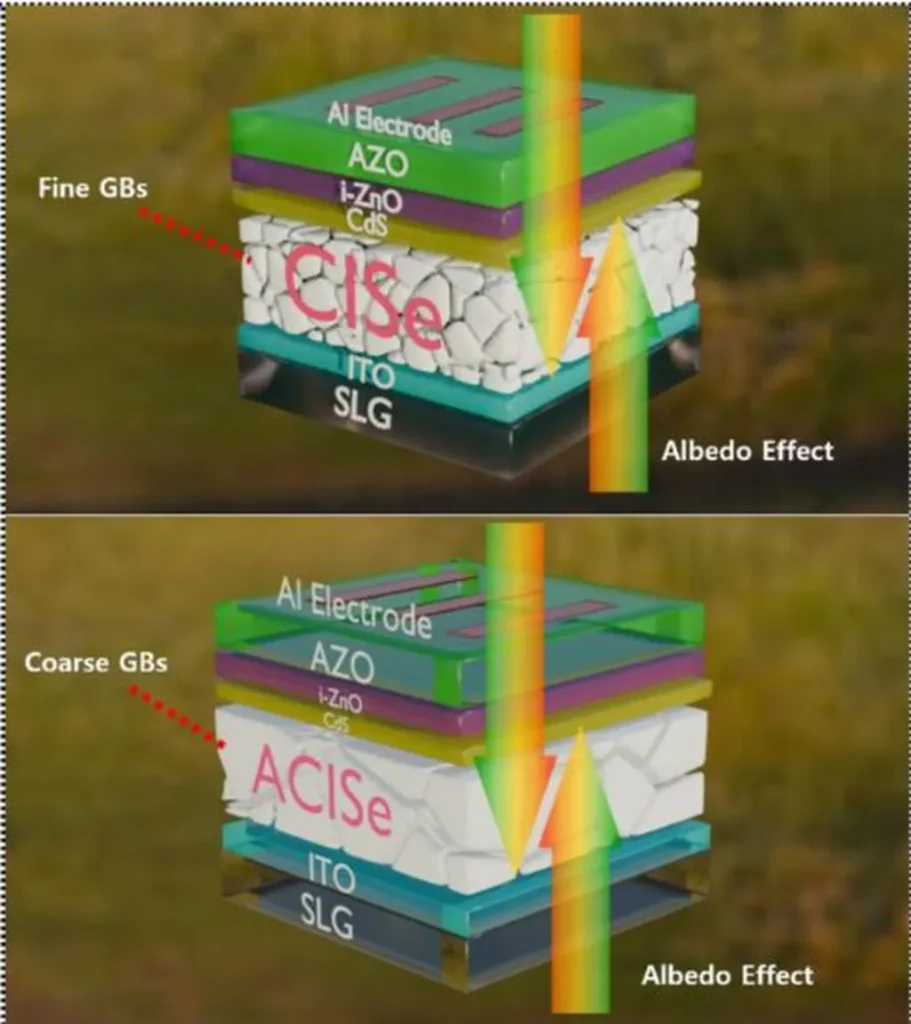
The team, led by Yucheng Hu and Rachel A. Oliver from the University of Cambridge, explored the effects of alloying silver with CIGS to form a new material called (Ag,Cu)(In,Ga)S2 (ACIGS). This alloying process led to notable improvements in the quality of the solar cell absorber, which is the layer that captures sunlight and converts it into electrical energy. The researchers found that adding silver enhanced the grain size of the absorber, reduced porosity, and passivated defects, all of which contribute to better performance. Additionally, silver alloying flattened the gallium gradient within the absorber, a factor that will need to be considered in future engineering efforts to maximize charge carrier collection and minimize interface recombination.
One of the most significant findings was the improvement in the power conversion efficiency of the solar cells. The ACIGS solar cells achieved an efficiency of 15.5%, a substantial increase from the 11.2% efficiency of the reference pure CIGS solar cells. The open-circuit voltage, a measure of the maximum voltage available from a solar cell, also saw a notable increase to 948 mV from 821 mV. These improvements highlight the potential of silver alloying as a strategy to enhance the efficiency of CIGS solar cells and future tandem devices.
The research was published in the journal Nature Communications, offering a promising avenue for the energy industry to explore in the pursuit of more efficient and cost-effective solar technologies. The practical applications of this research could lead to more efficient solar panels, particularly in tandem solar devices, which could be integrated into various energy systems to improve overall energy output and sustainability.
This work underscores the importance of continued research and innovation in the field of solar energy, as advancements in materials science can have a direct impact on the efficiency and viability of renewable energy technologies. As the energy sector seeks to transition towards more sustainable and efficient energy sources, the development of high-performance solar cells like those demonstrated in this study could play a crucial role in achieving these goals.
This article is based on research available at arXiv.