
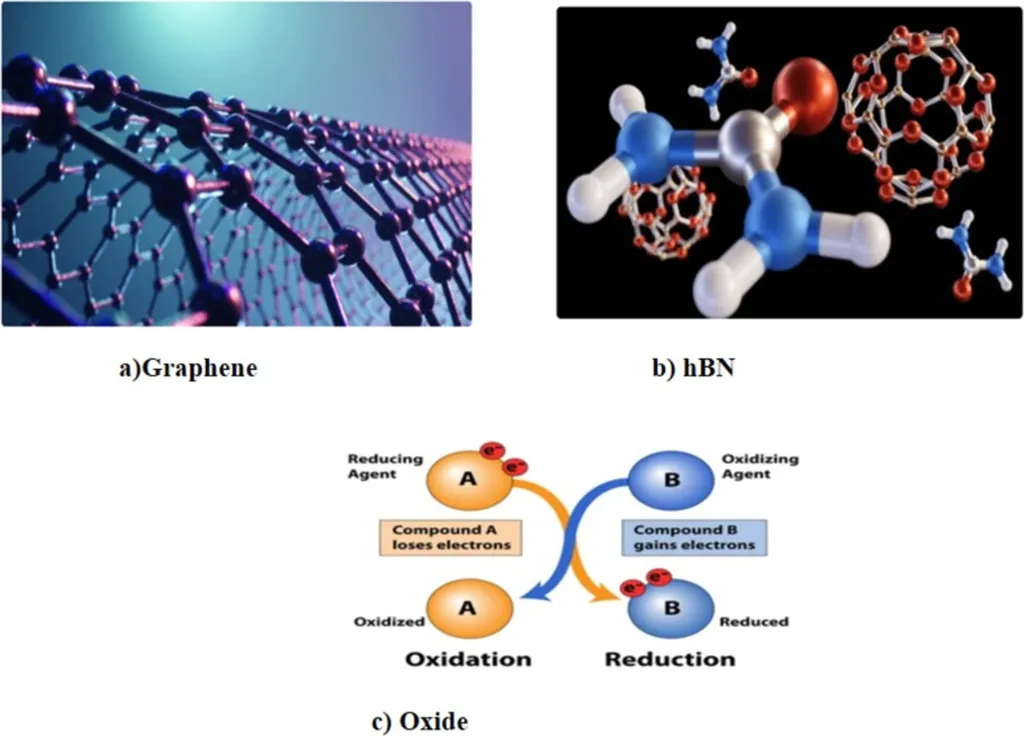
Researchers Shubhanshu Karoliya, Sumanta Tewari, and Gargee Sharma from the University of Utah have published a study in the journal Physical Review B, exploring the potential of graphene strips to host Majorana zero modes, which are of interest for fault-tolerant quantum computation.
Majorana zero modes (MZMs) are exotic quantum states that could potentially revolutionize quantum computing by providing a more stable and fault-tolerant platform. Graphene, a single layer of carbon atoms, has emerged as a promising material for hosting these states due to its unique electronic properties and compatibility with existing fabrication technologies. The researchers focused on three types of graphene strips: armchair, zigzag, and nearly square geometries, and investigated their potential to host MZMs under various conditions.
The team used a computational method called exact diagonalization to analyze the properties of these graphene strips when they are in contact with a superconductor and subjected to spin-orbit coupling, magnetic fields, and disorder. They found that the armchair strips with short zigzag edges provided the most stable platform for hosting MZMs. The researchers also developed a unified approach to identify and distinguish MZMs from other similar states, such as partially separated Andreev bound states and quasi-Majoranas.
The practical implications of this research for the energy sector are not immediate, as the focus is on quantum computing rather than energy generation or storage. However, the development of fault-tolerant quantum computers could potentially lead to breakthroughs in optimizing energy systems, simulating complex chemical reactions for energy storage, and improving energy distribution networks. The research provides concrete design guidelines for graphene-based topological superconductors, which could be a stepping stone towards practical applications in quantum computing and beyond.
The study, titled “Majorana modes in graphene strips: polarization, wavefunctions, disorder, and Andreev states,” was published in Physical Review B.
This article is based on research available at arXiv.