
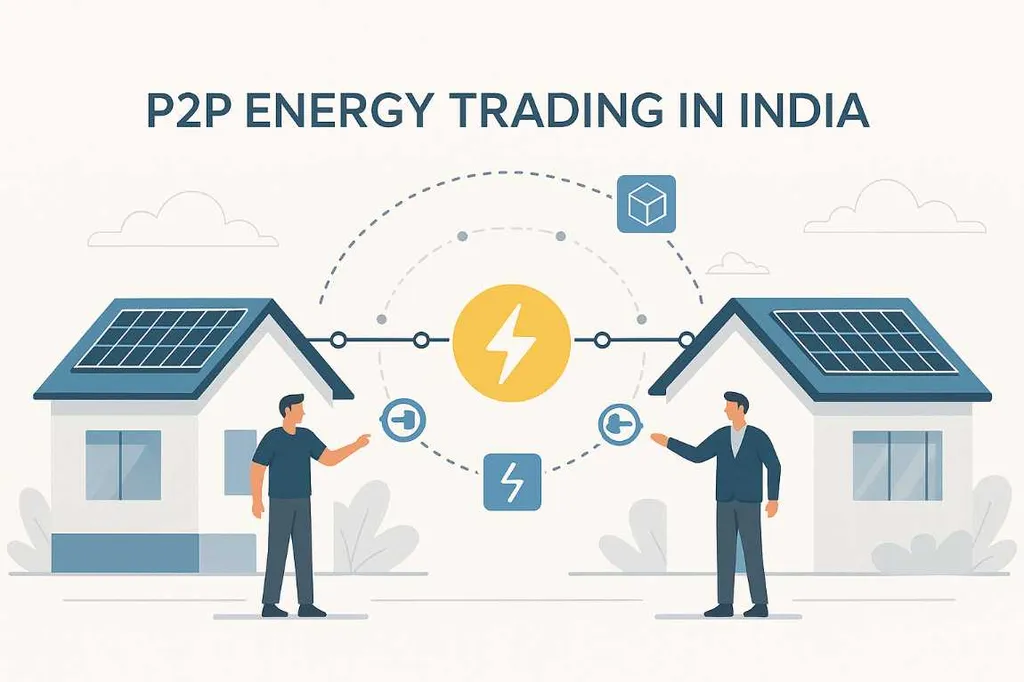
In the realm of energy research, a team from the University of Galway in Ireland has been exploring innovative ways to optimize energy management in rural communities, particularly dairy farming areas. The researchers, Mian Ibad Ali Shah, Marcos Eduardo Cruz Victorio, Maeve Duffy, Enda Barrett, and Karl Mason, have been investigating the potential of peer-to-peer (P2P) energy trading combined with advanced machine learning techniques to improve energy efficiency and reduce costs.
The study, published in the journal Applied Energy, focuses on the integration of renewable energy resources in rural areas, which can enable decentralized energy management through P2P energy trading. Traditional rule-based methods for energy management perform well under stable conditions but struggle in dynamic environments. To address this, the researchers combined Multi-Agent Reinforcement Learning (MARL), specifically Proximal Policy Optimization (PPO) and Deep Q-Networks (DQN), with community/distributed P2P trading mechanisms.
The researchers incorporated several elements into their approach, including an auction-based market clearing system, a price advisor agent, and load and battery management. The results of their study showed significant improvements compared to baseline models. For instance, DQN reduced electricity costs by 14.2% in Ireland and 5.16% in Finland, while increasing electricity revenue by 7.24% and 12.73%, respectively. PPO achieved the lowest peak hour demand, reducing it by 55.5% in Ireland, while DQN reduced peak hour demand by 50.0% in Ireland and 27.02% in Finland.
These improvements were attributed to both the MARL algorithms and the P2P energy trading mechanisms. The study highlights the complementary strengths of DQN, PPO, and P2P trading in achieving efficient, adaptable, and sustainable energy management in rural communities. The practical applications for the energy sector are significant, particularly in areas where renewable energy resources are abundant but energy management systems are not yet fully optimized. By implementing similar systems, energy providers and consumers could potentially reduce costs, increase revenue, and contribute to more sustainable energy practices.
The research was published in the journal Applied Energy, a reputable source for studies on energy-related topics. The findings offer a promising avenue for the energy industry to explore, particularly as the sector continues to evolve and adapt to new technologies and methodologies.
This article is based on research available at arXiv.