
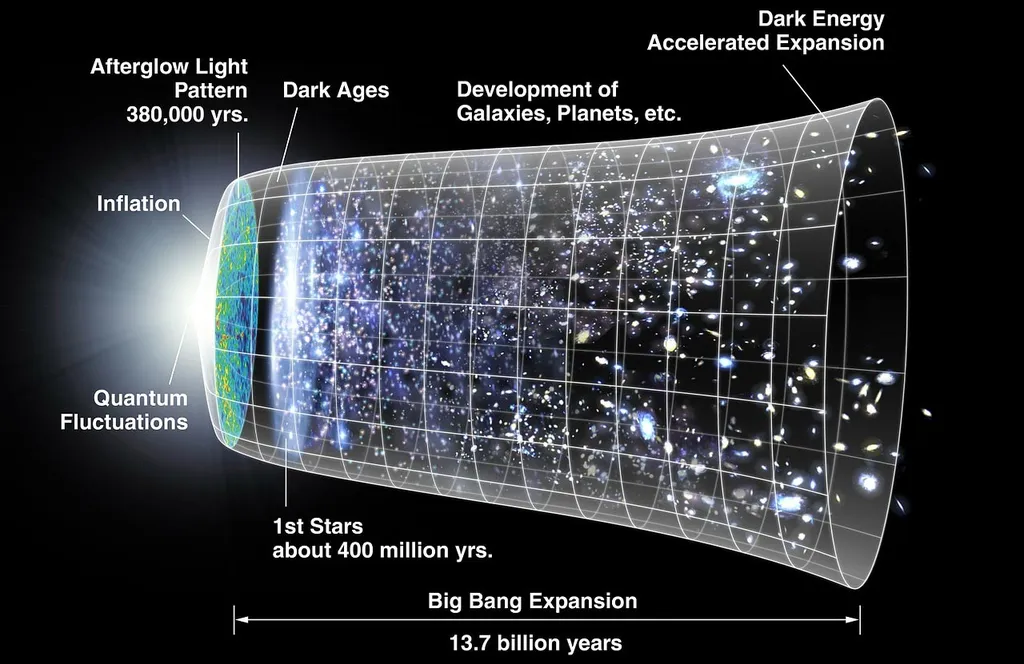
In the realm of energy journalism, a recent study conducted by researchers Takayuki R. Saitoh, Yutaka Hirai, Michiko S. Fujii, and Yuki Isobe from the University of Tokyo and the National Astronomical Observatory of Japan, sheds light on the early processes of star and galaxy formation, which could have implications for our understanding of the universe’s energy dynamics. Their work, published in the journal Nature Astronomy, focuses on the chemical signatures observed in distant, compact, star-forming galaxies, and what these signatures can tell us about the energy processes driving star formation.
The James Webb Space Telescope has revealed that galaxies like GN-z11, located at a high redshift of approximately 10, exhibit unusually high nitrogen enrichment, characterized by high nitrogen-to-oxygen (N/O) ratios. The origins of these chemical signatures are not yet fully understood, but they provide valuable insights into the early star and galaxy formation processes. To investigate these processes, the researchers performed high-resolution cosmological zoom-in simulations of massive galaxies at high redshift, incorporating various chemical evolution channels, including stellar winds, core-collapse supernovae, Type Ia supernovae, and asymptotic giant branch stars.
The simulations successfully reproduced several key features of high-redshift galaxies. They showed that stars form with high efficiencies at the center of rare peak halos, creating very compact galaxies similar to GN-z11. The high N/O ratios observed in these galaxies emerge during the first 10-20 million years of intense starburst activity, before being diluted by core-collapse supernovae. Additionally, the simulations revealed that multiple star clusters form in and around the galaxy with high efficiency, some of which exhibit high N/O ratios and sodium-oxygen anti-correlations similar to those observed in local globular clusters.
While the simulations were able to reproduce high log(N/O) values, they did not reach the observational lower limits of GN-z11. This discrepancy suggests that there is still room for improvement in the models, potentially through the inclusion of additional chemical evolution channels, such as supermassive stars. Understanding these processes is crucial for the energy sector, as the life cycles of stars and galaxies are intimately linked to the production and distribution of energy in the universe. By gaining a deeper understanding of these processes, we can better comprehend the energy dynamics that have shaped the universe since its earliest stages.
The research was published in the journal Nature Astronomy, providing a valuable contribution to the field of astrophysics and offering insights that could have implications for our understanding of energy processes in the universe.
This article is based on research available at arXiv.