
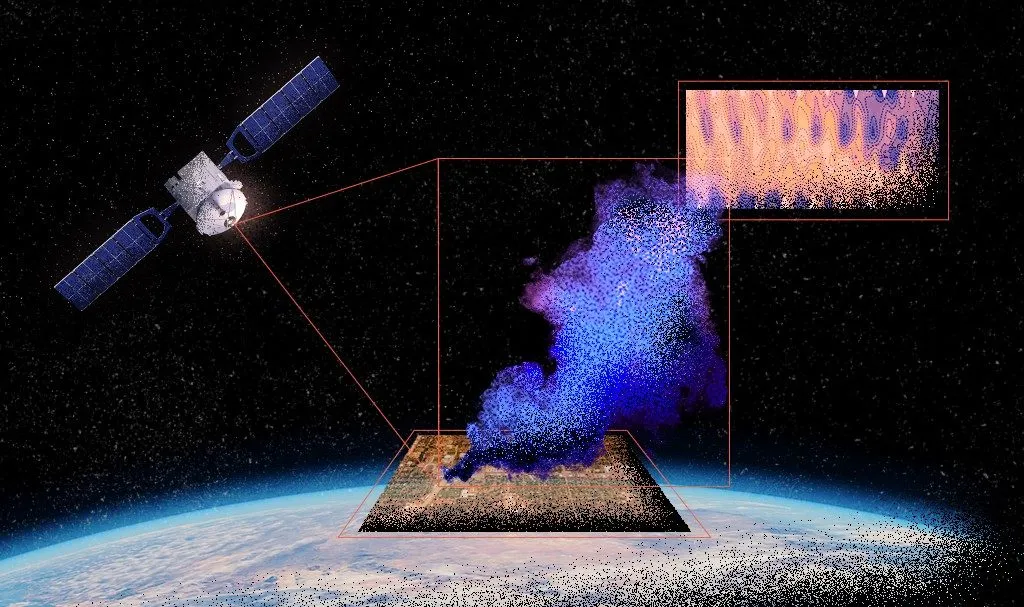
In a significant stride towards combating climate change, a team of researchers from Kayrros, the University of Valencia, and the United Nations Environment Programme (UNEP) International Methane Emissions Observatory (IMEO) has developed an innovative machine learning model to detect methane emissions from space. This advancement could greatly benefit the energy industry by providing a scalable solution for monitoring and mitigating methane leaks.
The researchers, led by Anna Allen and Gonzalo Mateo-Garcia, have introduced MARS-S2L, a machine learning model designed to identify methane emissions in publicly available multispectral satellite imagery. The model was trained on a manually curated dataset of over 80,000 images, enabling it to provide high-resolution detections every two days. This capability allows for facility-level attribution and significantly improves the accuracy of methane emission detection.
MARS-S2L has demonstrated impressive results, identifying 78% of plumes with an 8% false positive rate at 697 previously unseen sites. When deployed operationally, the model issued 1,015 notifications to stakeholders in 20 countries. This proactive approach has already led to the verified, permanent mitigation of six persistent emitters, including a previously unknown site in Libya. The research was published in the journal Nature Communications.
The practical applications for the energy sector are substantial. Methane, a potent greenhouse gas, is responsible for roughly 30% of warming since pre-industrial times. A small number of large point sources account for a disproportionate share of emissions, making targeted monitoring and mitigation efforts highly effective. By utilizing MARS-S2L, energy companies can continuously monitor their assets, quickly identify and address leaks, and significantly reduce their methane emissions.
This technology not only helps in meeting regulatory requirements but also supports the energy industry’s transition towards more sustainable practices. The ability to detect and mitigate methane emissions at scale provides a clear pathway for companies to reduce their environmental impact and contribute to global climate goals. The research highlights the potential of artificial intelligence and satellite technology in transforming how the energy sector manages and mitigates methane emissions.
This article is based on research available at arXiv.